.png?h=73&iar=0&w=336&rev=4514616e2d664321b0f00000edb6c805&hash=8B3B0F762280E79EA2843EF76E360E7F)


More Than an Application: The Journey of College Counseling
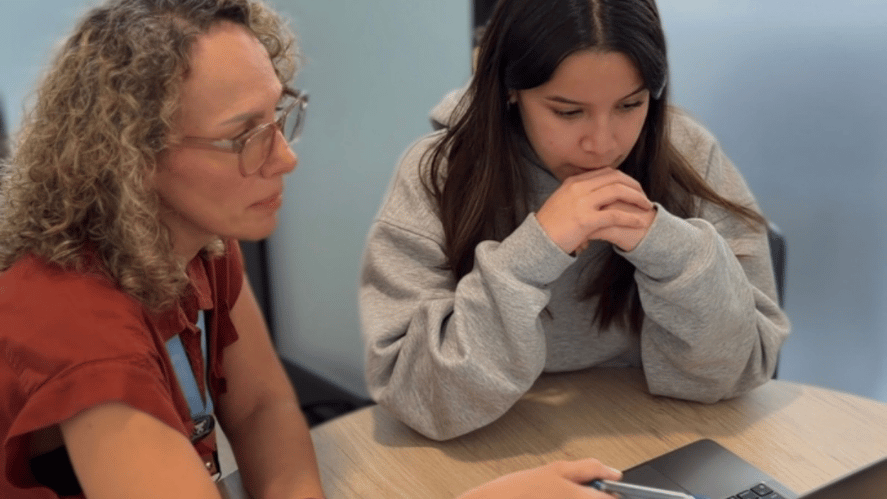

Few things are more rewarding to me than hearing from a former student who says, “You encouraged me to consider a university I had never thought of,” or “You helped me discover the path I wanted to pursue.”
Knowing that I played a meaningful role in helping a student find their direction is one of the most fulfilling parts of what I do. Those messages stay with me.
After 13 years working in College Counseling, I have learned that helping students find their next step after high school is not only about choosing a university. It is about listening, asking the right questions, opening possibilities, and sometimes having difficult conversations. Most importantly, it is about helping young people gradually understand who they are, what they are capable of, and where they might thrive.
It Starts with Listening
One of the most important parts of my job is also one of the simplest: listening.
Every student who walks into my office brings a different story. Some arrive in Grade 9 convinced that they know exactly what they want to study and where they want to go. Others reach Grade 11 or even Grade 12 still saying, “I have no idea.”
And that is okay.
Students develop at different times and in different ways. The journey from Grade 9 to Grade 12 gives us an opportunity to observe their interests, strengths, challenges, and growth.
For some, the path becomes clear relatively quickly. For others, we may use personal and career assessments, conversations, university exploration, academic planning, and reflection before possibilities begin to emerge.
My role is not to decide a student’s future for them. It is to help them ask better questions, provide reliable information, and give them the tools to investigate their options so they can eventually make informed decisions for themselves.
Finding the Right Fit, Not Just a Name
When families begin thinking about university, it is natural to focus on names, rankings, countries, or prestigious institutions. However, one of the most important questions we can ask is much more personal:
Where will this student thrive?
A university that is perfect for one student may be completely unsuitable for another.
Academic profile matters, but so do personality, independence, learning style, career interests, family circumstances, finances, location, language, and readiness to live away from home. This is why College Counseling is such an individualized process.
Sometimes my role is to introduce a student to an opportunity they never knew existed. Other times, it is to help a family reconsider an option that may look wonderful on paper but may not be the best fit for their child.
Sometimes Guidance Means Having Difficult Conversations
Not every College Counseling conversation is easy.
Sometimes I must explain that a student’s current academic profile may not be competitive enough for a particular university. Sometimes we need to discuss financial realities. In other situations, a student may need more time to develop independence, responsibility, or clarity before taking a major step into higher education.
These conversations are sensitive because behind every university application there are hopes, not only those of the student, but often those of an entire family.
That is why these conversations must always come from a place of care, evidence, and possibility.
Saying, “Perhaps not this path right now,” should never mean, “You cannot succeed.” Sometimes the most responsible guidance is to find another route.
There are many pathways to a meaningful future: a different university, another country, a foundation or pathway program, a gap year, a transfer route, or simply an institution that is a better match.
Over the years, I have seen that changing direction is not necessarily a setback. Sometimes it is exactly what allows a student to flourish.
College Counseling Is a Partnership
Students do not make this journey alone.
Families are essential partners, which is why communication is such an important part of College Counseling. Through individual meetings, parent conversations, student workshops, university visits, college fairs, assessments, and information sessions, we work together to make the increasingly complex world of higher education easier to understand.
University admissions have changed enormously over the years, and they continue to evolve. Requirements differ between countries and institutions, admissions policies change, new academic programs emerge, and entirely new career fields appear.
This means that my own learning never stops either. Every student challenges me to research something new, understand another educational system, discover a different pathway, or look at higher education from a new perspective.
The Moment It Becomes Worth Everything
College Counseling requires patience, research, difficult decisions, countless conversations, and many hours of work that students and families may never see.
But then comes the message:
“I got in!”
Or, sometimes years later:
“I am exactly where I am supposed to be.”
Those moments remind me why I have loved doing this work for the past 13 years.
The greatest reward is not simply seeing the name of a university on an acceptance letter. It is watching a young person become more confident, independent, curious, and intentional about their future.
Our students will eventually become professionals, creators, entrepreneurs, researchers, educators, and leaders who shape our communities. Being able to accompany them during the years when they begin imagining that future is an extraordinary privilege.
Perhaps that is what I value most about being a College Counselor: while I am helping students discover what comes next for them, they continually inspire me to keep learning, growing, and discovering what comes next for me as an educator.
Every year, with every graduating class, I am reminded of something important:
We are not simply helping students get into universities. We are helping them learn how to choose a future that belongs to them.
Author
Tzely Shalev
College Counselor
Inspired by reflections and experiences from the 2026 International ACAC Annual Conference.
Related news
 Samborondon News
  Samborondon News

Juan Montalvo N2-168 y Manuela Sáenz Cumbayá.
General: (5932) 4008100
admisionesuio@colegiomenor.edu.ec




Av. León Febres Cordero 823 Vía a Samborondón Km. 9.
General: (5934) 5000250
admisionesgye@colegiomenor.edu.ec